
The students who participated in NCSSM’s annual Ethics and Leadership Conference got to hear from distinguished leaders in the field of AI. (photo: Crystal Woods)

Over 200 high school students turned out recently for NCSSM’s Ethics and Leadership Conference, held on the Durham campus of NCSSM. The conference is one of the school’s longest running outreach efforts and has reached thousands of North Carolina students in the decades since it originated.
This year’s theme was Mind and Machine: Our Logic. Our Ethics. Our Future. Three speakers – Dr. Siobahn Day Grady, an Associate Professor in the School of Library and Information Sciences at North Carolina Central University; Professor Po-Shen Loh, a mathematician at Carnegie Mellon University; and Phaedra Boinodiris, the Global Lead of IBM Consulting’s Responsible AI Practice – shared with students their expert perspectives on how artificial intelligence and human minds can and should work together to safely derive results beneficial to humanity.
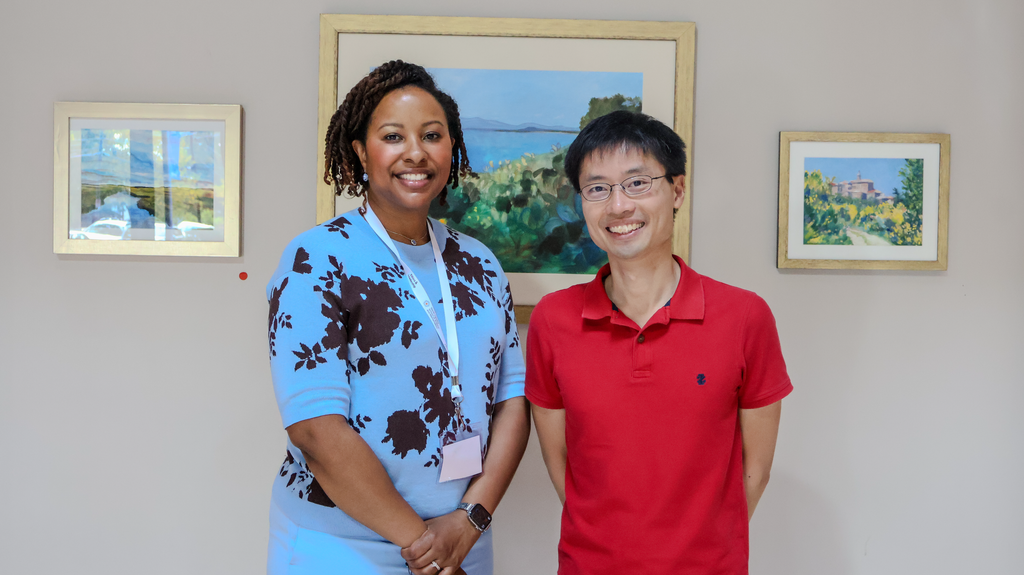
High school freshman Zach Kissiah came to the conference from Heritage High School in Wake Forest. He is interested in pursuing a career in engineering, but he knows how ubiquitous AI is becoming in nearly every facet of life and wanted to gain a new perspective on how AI can influence how one thinks and acts.
“AI is a very powerful tool and it can really affect all the aspects of your life,” he said. “I want to see how that sort of interacts with one’s morals and ethics.”
Zach noted the particular importance of today’s students becoming well-versed in the challenges posed and opportunities created by artificial intelligence.
“As time progresses, these students are going to be the ones using it the most, so of course they have to know about the ethics the most because if there are no ethics, then that could just sort of derail everything.”
The Ethics and Leadership Conference traces its roots to a leadership seminar developed three decades ago for 30 NCSSM seniors. The seminar proved so successful that it morphed into a one-day statewide conference on the NCSSM-Durham campus that today typically serves more than 200 students in grades 9-12 from every region of North Carolina. The conference emphasizes collaborative learning and problem solving and nurtures global leaders who can navigate the complexities of science, technology, and international relations.
When the first seminar was launched in 1996, the focus was on ethical decision-making in STEM and the humanities. That general focus remains, but the conference has expanded in the years since to adapt to new challenges. Recent conference themes have included topics such as Data and Democracy, and Should We Hack Humanity?
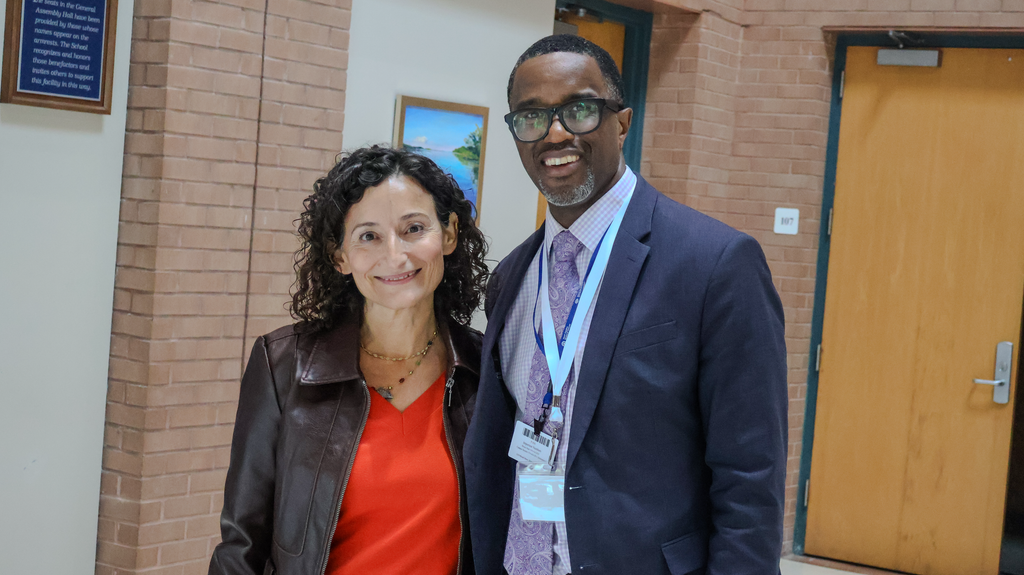
Navya Sharma was another participant in this year’s Ethics and Leadership Conference. A sophomore from East Chapel Hill High School, Navya hopes to do work in the future on ethical challenges presented by AI. She says that the conference at NCSSM-Durham made her think about questions she had not considered before, as well as helped her expand her understanding of issues she was already aware of. She wishes opportunities for students to engage in such discussions were more common.
“I wish there were things like this happening in all schools so kids would be more informed,” she says. “A lot of people are out there saying we have to regulate AI and be careful about it, because it’s going to be our future, but it’s also very harmful. So how are we going to do that? I want to know how I can make a difference in doing that.”
“As an institution, the Ethics and Leadership Conference is an honor to offer and an inspiration to witness,” says Jamie Lathan, NCSSM’s Vice Chancellor for Extended Learning, which hosts and manages the conference each year. “That we play a part in these students’ contemplations of current and future ethical issues is just an incredible feeling. Watching them work together with courage, compassion, wisdom and empathy to design their future reinforces why we do this, and makes us want to work even harder to make sure that those in search of opportunities to grow and learn and lead get as many chances as possible to do so.”
Funding for the Ethics and Leadership Conference was provided in part by the Broyhill Family Foundation, Inc.


