
NCSSM’s Dr. Kat Cooper helps students set up an experiment in her Analytical Chemistry and the Murder at the Candy Factory course. (photo: Lura Jones)

Callie McNeil – in her white lab coat, blue Nitrile gloves, and green goggles – was right where she wanted to be this summer: hands-on in a science laboratory at NCSSM-Durham. The rising sophomore from Terry Sanford High School in Fayetteville plans to be a biomedical engineer one day, so the experience she was getting as part of NCSSM’s Step Up to STEM summer program was invaluable.
Step Up to STEM is a week-long, two-summer residential program designed to expose rising ninth- and 10th-grade students from throughout North Carolina to opportunities in STEM fields through short-form course work not typically available to them at their home high schools. Students enter as freshmen, when they spend their week moving between activities in math, science, and engineering, and then return the following summer to focus on a project in one of those disciplines.
Callie and about a dozen others in her cohort were part of a class called The Case of the Suspected Pathogen. Students were provided medical case studies of hypothetical patients at the beginning of the week and then asked over the subsequent days to isolate the biological samples, then characterize and identify the suspected pathogen. On this day, Callie was moving fluid samples from glass vial to glass vial in an effort to dilute them through microbiology processes. As she did so, other students around her were busy with next steps, adding samples to petri dishes with cotton swabs and tweezers.
“Step Up to STEM is a place where there’s a great community, and you learn so much,” Callie says. “It’s a great way to step your foot into STEM and figure out what you want to do, and foster your interests. Coming here and doing hands-on things and [getting a] more personalized experience really helps further my skills.”
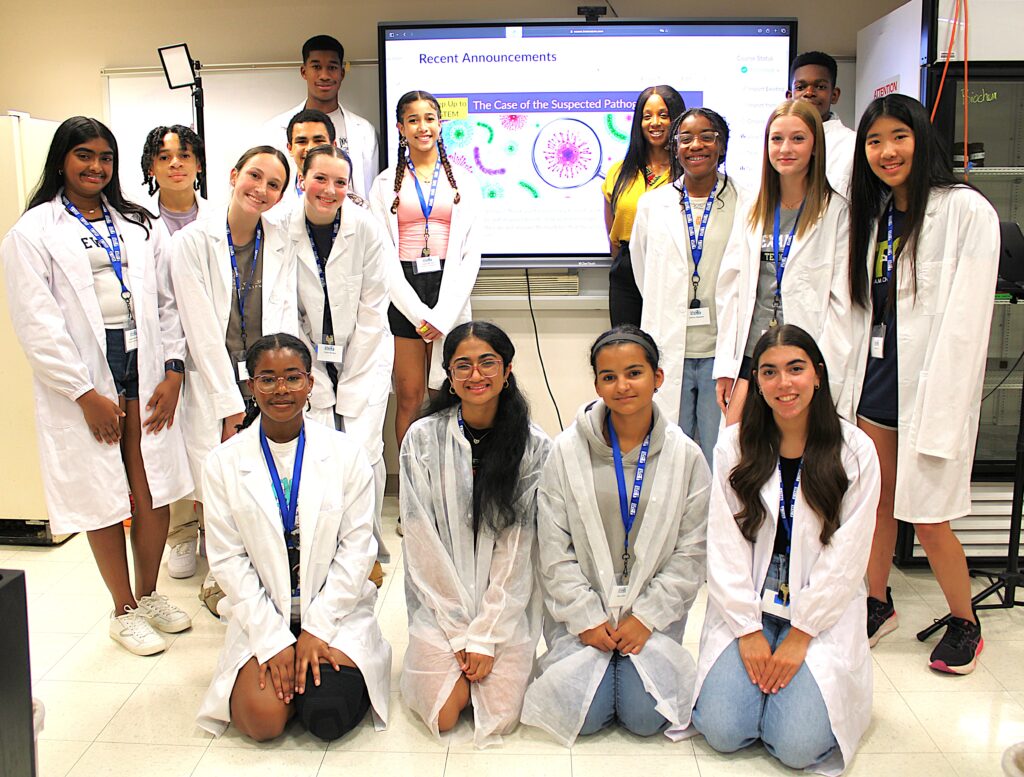
Thirty-three students made up the first group of Step Up to STEM participants who came to NCSSM-Durham in 2013. This summer, the program enrolled over 160 students participating in two locations – NCSSM-Durham and Elizabeth City State University.
“This was a record-breaking year for the program in terms of applications,” said Gerri Cole, who helps administer the program as Associate Director of STEM Access and Outreach from her base in Durham. “We’ve never had this many enrollees, either, so both of those things are something to celebrate.”
But it’s not a record that should stand long. Next summer a third Step Up to STEM location will come online at UNC-Pembroke, boosting the program’s reach even further.
While Callie McNeil was busy in one of NCSSM’s wetlabs, Chloe Ball, a rising Pisgah High School sophomore from Waynesville, was in an engineering classroom learning how to make the world safe from cyber threats in a course called Cybersecurity – A Cryptography Adventure. Students sat next to one another in rows, scrolling through a seemingly unending series of numbers and letters that, combined, constituted a code that helped anonymize personally identifiable information and datasets. With each subtle key stroke, Chloe wielded a digital power that far exceeded the physical energy required to move her fingers across the keyboard.
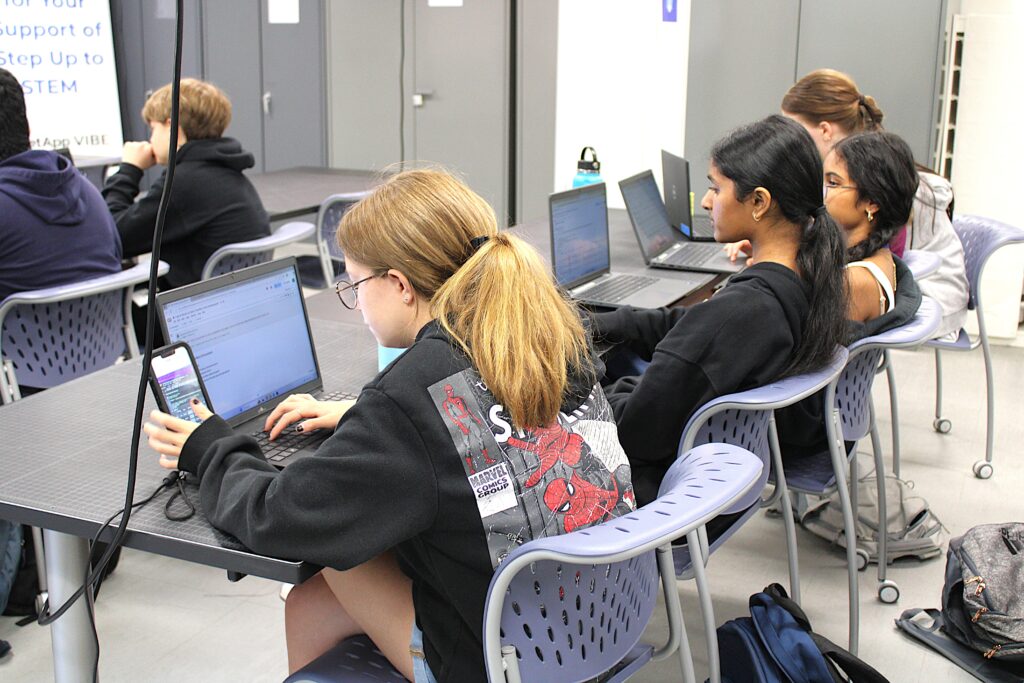
“If you’re on campus for Step Up to STEM, it’s because you want to be here, you want to learn, and you want to excel,” Chloe says. “That is kind of inspiring. Everyone here wants to do good, and that makes me want to do better. If I hadn’t been here, I would have never tried [the programming language] Python. I didn’t know I would be able to do it, so I was a little surprised that I’m capable of it.”
The program’s success can be found in the 83% rate of students who return for the second year of programming, a number that has held relatively steady for several years. Perhaps that’s because there’s no external pressure to “perform.”
“There are no grades for this,” Cole says.”It’s okay if a student doesn’t know an answer, or if a student makes a mistake, or if they fail. There’s no external pressure to achieve. Instead, there’s opportunity to be creative and think outside the box. Students begin to learn that there are different pathways that they can take to get to where they want to be.”


