
NCSSM students and community members make art with natural inks at the Bluestem Conservation Cemetery. (photo: Liz Peeples)
news
news

On the barn at the Bluestem Conservation Cemetery in the Cedar Grove community in rural Orange County is a carved plaque with three simple words: “Nature is Enough.”
Celebrating that sentiment on a Saturday in early March were a number of NCSSM-Durham students along with 40 or so members of the larger Bluestem community who all came together at the conservation cemetery for a two-hour gathering called Loving a Place: A Land Ethic Event. The event was part of the nation-wide Aldo Leopold Week sponsored by the Aldo Leopold Foundation, which celebrates the life and extends the work of its famed namesake conservationist, ecologist, and author by fostering individuals’ stewardship of and relationships with nature.
The students on hand came from NCSSM’s Ecocriticism class led by humanities instructor Liz Peeples, its Environmental Biology class led by science instructor Erin Quinlan, and several of the school’s Sustainability Project Leaders who advocate for and advance sustainability initiatives at NCSSM. Together, these students and their instructors collaborated with the Bluestem Community and the Eno River Association to organize and host the event.
Peeples’ role in bringing everyone together was especially critical; it was she who wrote and received a grant from the Aldo Leopold Foundation to underwrite the gathering.
“I’ve been taking students to Bluestem since 2023 and I wanted to get my Ecocriticism students involved on a deeper level with the larger Bluestem community,” Peeples said. “When I saw the opportunity to get a grant for an event, I knew that it was the perfect opportunity.”
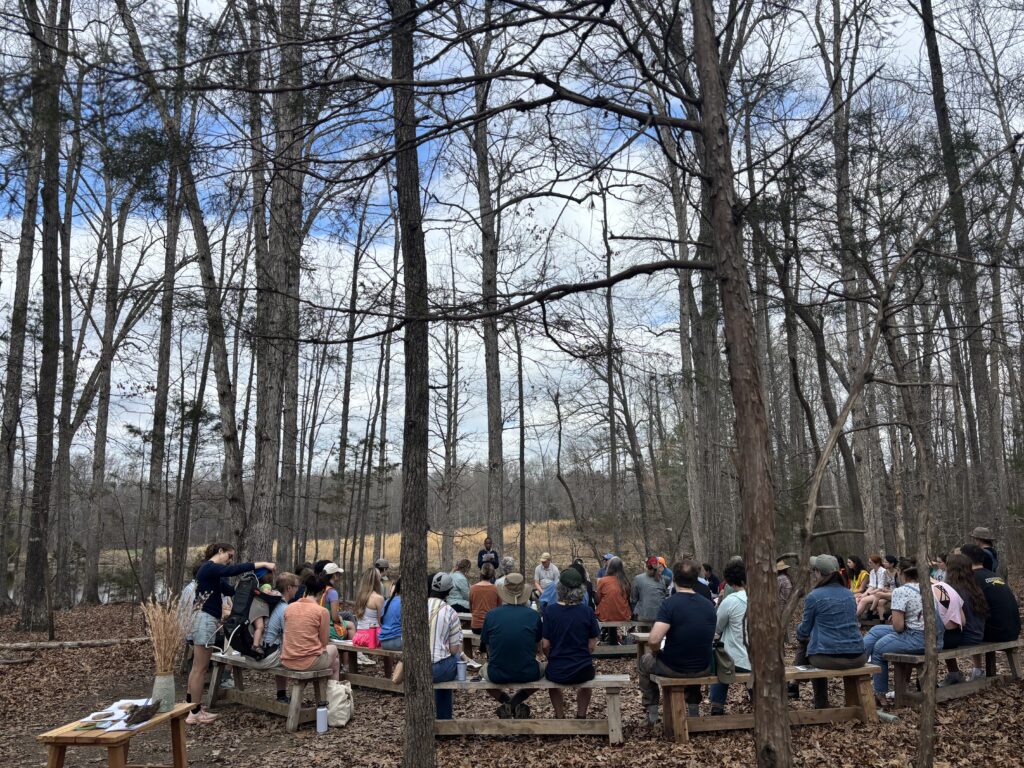
The celebration began beneath the canopy of trees by the sanctuary’s pond with a communal reading of Joy Harjo’s poem “Calling the Spirit Back From Wandering the Earth in Its Human Feet”. Students and other community members – including Maura High, a published poet from Orange County – then read poems and excerpts from texts that center and expand on Leopold’s concept of a Land Ethic.
Caden Bringewatt ’26 was one of those from NCSSM who read, reciting excerpts from Barbara Kingsolver’s essay “Knowing a Place”.
“As a reader I felt like I had an ability to help set the tone for the day and get people thinking about the world around them in a new way which was particularly special,” Cade said.
The second half of the event consisted of student-run art stations in which participants could paint with ink made from acorns or sumac berries or create cyanotypes from items that students collected from the fields and woods of Bluestem.
Bella Rizzuto and Eliza Mae Clayton, seniors in the Ecocriticism class, began preparing for the event in the weeks leading up to it by sketching simple drawings of an acorn, bluestem, black walnut, and sumac berries that participants then used as coloring pages for the ink.
“It was really great to see everyone experimenting with the different inks,” Eliza Mae said. “One person even used grass to color their work.”
One of those experimenting was Durham resident Karen Behling. “I particularly loved learning about the native species while I got to paint with a brush made of dried grass and ink made from sumac berries,” she said.
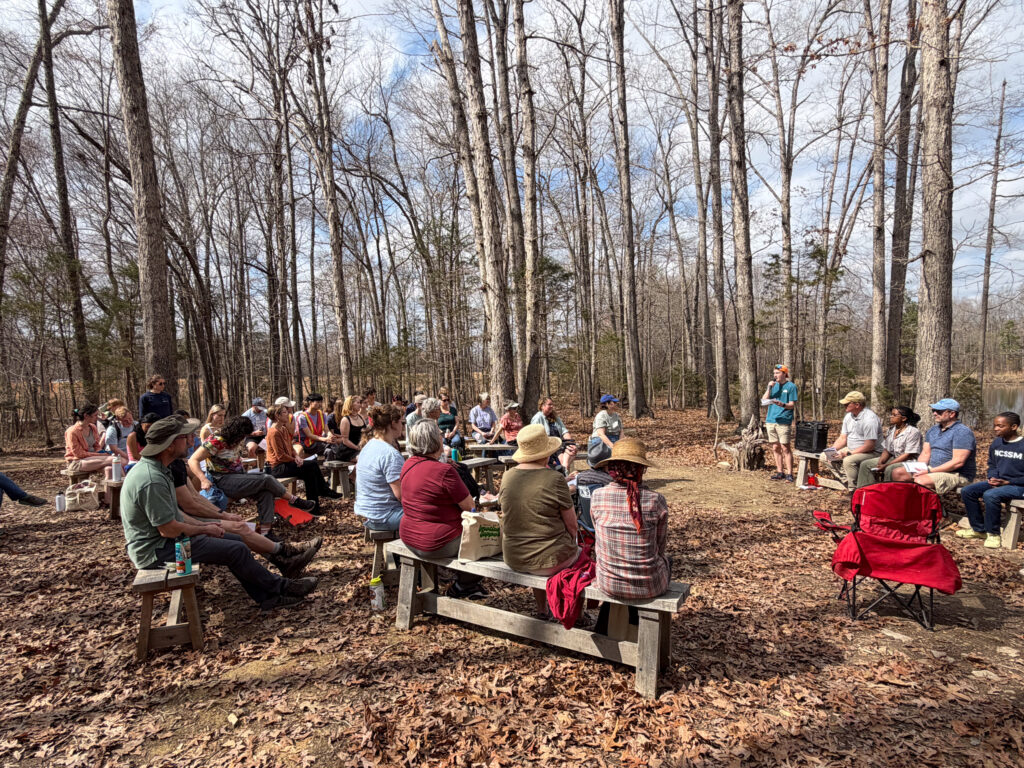
While many participants chose art-making, others chose a guided meditation walk or nature journaling. Both of these activities allowed visitors to slow down and attend to their senses in nature.
Heidi Hannapel, co-founder and co-director of Bluestem, was more than pleased with the celebration. “It was such a delight to see the intergenerational nature of the event, and to see adult visitors participating in the art offerings and being instructed by students,” she said. “It was all a wonderful reminder that nature really is enough, and a reminder that attending to our obligation to the natural world is regenerative and forever work.”
NCSSM Communications would like to thank humanities instructor Liz Peeples for drafting this story in its original form.


